Plant Roofs

Hazleton Industrial Roof Repair Contractor

Protect Production Lines While Fan and Stack Flashing Is Rebuilt

Hazleton industrial roof repair is planned with plant staff. We repair flashing, seams, and curbs on busy plant roofs while the lines below stay covered.

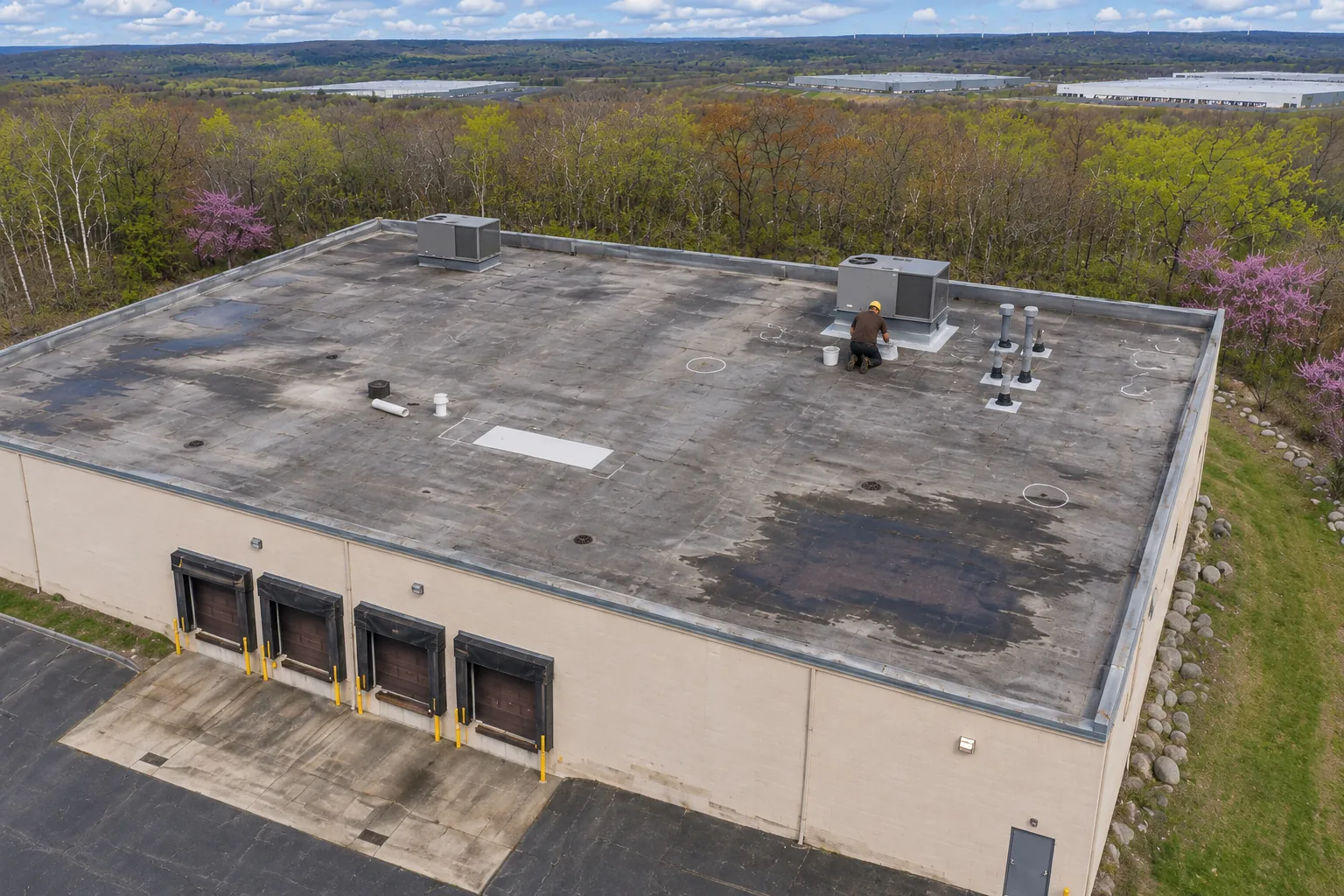
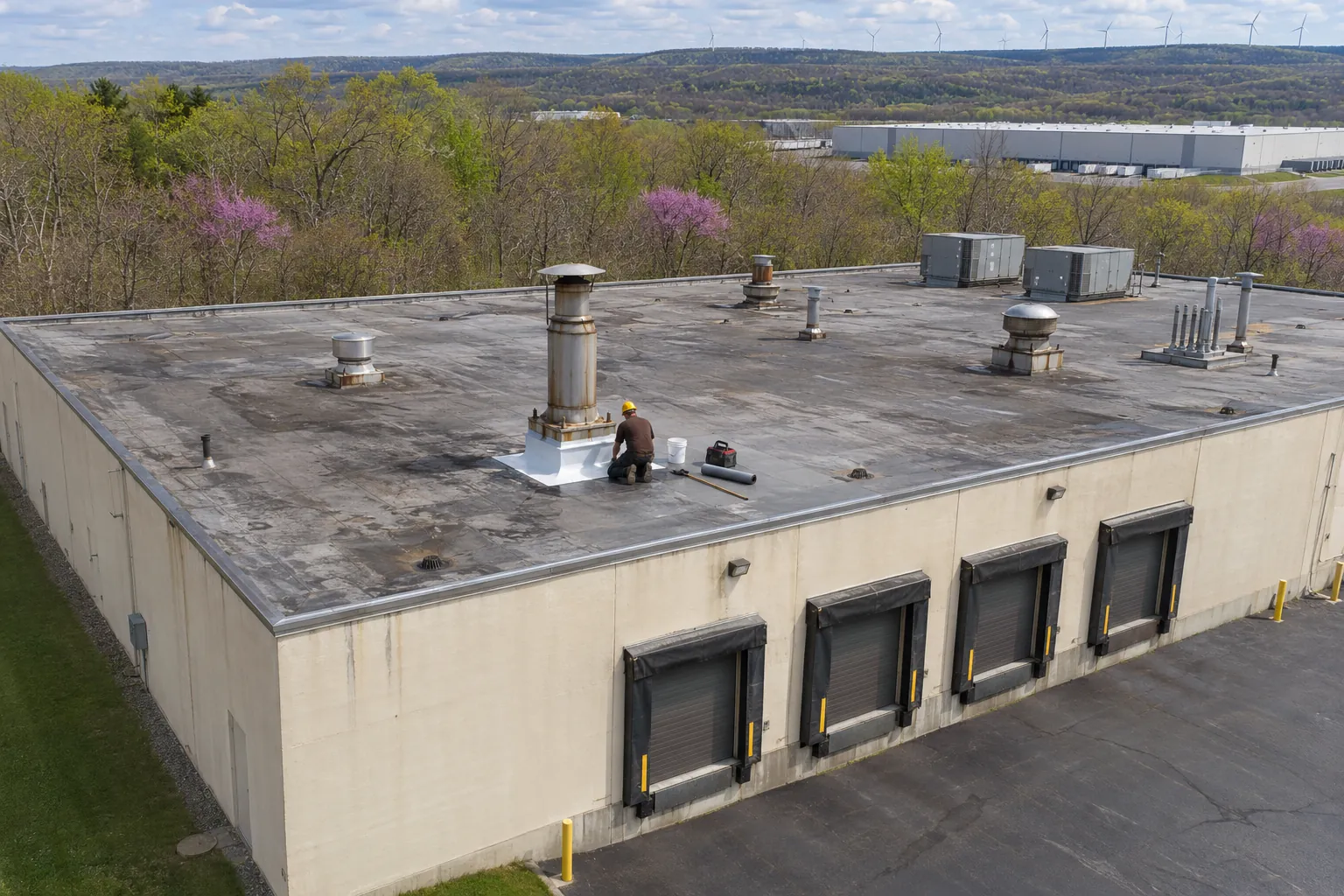
Roofer flashing the base of an exhaust stack on a large industrial roof with vents and rooftop units
  • Exhaust FansCurbs and flashing
  • StacksBase flashing rebuilt
  • Plant StaffWork sequence agreed
  • RecordsFindings by location

Hazleton Industrial Roof Repair or Section Rebuild

Hazleton industrial roof repair handles most plant roof leaks. Wide wet areas or deck damage move the job to a section rebuild.

Most Plant Leaks

Detail Repair

Leak Area
At fans, stacks, curbs, or a service path.
Equipment
Flashing rebuilt; equipment work coordinated.
Deck
Firm under the repair area.
Plant Impact
Small opening, covered and timed with staff.
Result
Flashing and membrane rebuilt at the detail.
Wide Damage

Section Rebuild

Leak Area
Across a section around several details.
Equipment
Units supported or moved during the work.
Deck
Soft or corroded deck found in cores.
Plant Impact
Larger protected area or a planned shutdown.
Result
New assembly tied into the roof around it.

Industrial Roof Repair Problems at Hazleton Plants

Plant roofs fail at the details that carry equipment and traffic.

  • Fan Curb Splits

    Vibration from exhaust fans keeps working the curb flashing until it cracks at the corners again. Fan bases are checked for movement before the curb flashing is rebuilt.

  • Stack Base Flashing

    Heat and movement at process stacks loosen the collar and base flashing that seal the roof penetration. Collars sized to the stack and its heat replace loose or warped ones.

  • Discharge Damage

    Greasy or chemical discharge from exhaust softens membrane downwind of fans and stacks. Softened membrane downwind of the discharge gets cut out and replaced.

  • Service Path Wear

    Foot traffic between units scuffs membrane and loosens laps along routes the maintenance crew walks every week. Walkway pads along the busiest routes keep boots off the membrane.

  • Abandoned Curbs

    Old equipment curbs left after a line change become weak points where flashing is no longer watched. Curbs that will never carry equipment again are good candidates for removal.

  • Wet Insulation Spreading

    Leaks left over machinery soak insulation across a bay and add load to an older deck. Cores across the bay show how much insulation has to come out with the repair.

Industrial Roof Repair Methods Used in Hazleton

Each method is planned around the equipment it sits beside.

  • Industrial Roof Leak Repair

    The leak is traced on the roof and inside, then the opening is repaired with the area below covered and staff informed. Staff are told which bays sit under open work and for how long.

  • Roof Repair Around Exhaust Fans

    Curb flashing is rebuilt and the fan base is checked for movement, so the source of vibration is dealt with too. Maintenance gets a note when the fan base itself needs attention.

  • Stack Collar Replacement

    Base flashing and storm collars at stacks are replaced to fit the stack size and the heat it carries. Rain collars are set above the base flashing to shed water off the stack.

  • Walkway Protection

    Worn service paths get new membrane and protective pads so foot traffic stops grinding into the roof. Pads go down after the worn membrane underneath has been repaired.

What Industrial Roof Repair Protects at Hazleton Plants

Plant roof repairs aim at keeping water off machinery and product.

  • Covered Production Lines

    Openings over equipment are protected and timed with staff, so the line below stays dry during the work. Covers and timing are agreed with the shift supervisor before work starts.

  • Flashing That Stays Put

    Dealing with fan vibration and discharge along with the flashing keeps repairs from splitting again. Fan mounts get flagged to maintenance when they are the source of movement.

  • Safer Service Routes

    Pads and new membrane along maintenance paths stop wear that opens laps between units. Paths are laid where crews already walk between units.

  • A Usable Roof Log

    Findings tied to roof locations let the facility manager see repeat trouble at the same fan or curb. Each entry names the fan, curb, or stack by its roof location.

Leak Over a Running Line?

Call with the bay and the equipment underneath. Protection below gets planned before any opening is made.

Call Us(570) 918-5814

Steps in a Plant Roof Repair

Plant staff are part of the plan from the first visit.

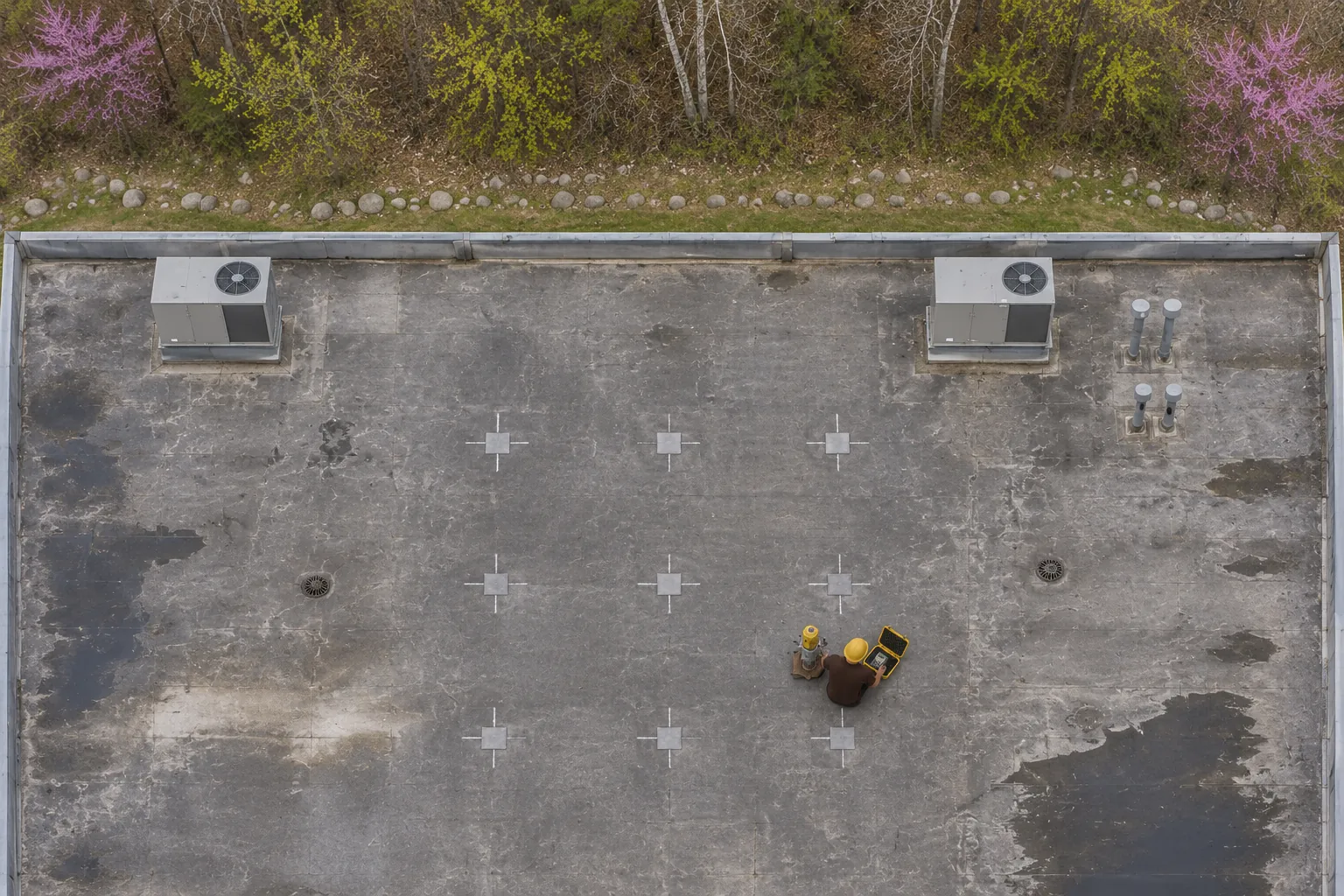
Top-down view of a flat roof marked with a core-cut grid and a roofer taking a core sample
  1. 01

    Agree on Protection

    Water exposure, debris, and any roof opening are discussed with plant staff before work starts. Shutdown windows are noted if protection alone will not do.

  2. 02

    Inspect Equipment Details

    Fan curbs, stacks, units, and service paths are checked, along with the membrane around them. Discharge stains and soft membrane near fans are marked.

  3. 03

    Mark Boundaries and Cores

    Moisture and deck condition set the repair area, which is marked on the roof plan. The plan shows staff exactly which bays sit under the work.

  4. 04

    Repair in Sequence

    Work runs in the agreed order, with openings covered at shift ends and equipment work coordinated. Each finished detail is photographed before the crew moves on.

Other Repairs Found on Plant Roofs

Plants often combine roof types and leaks with unclear sources.

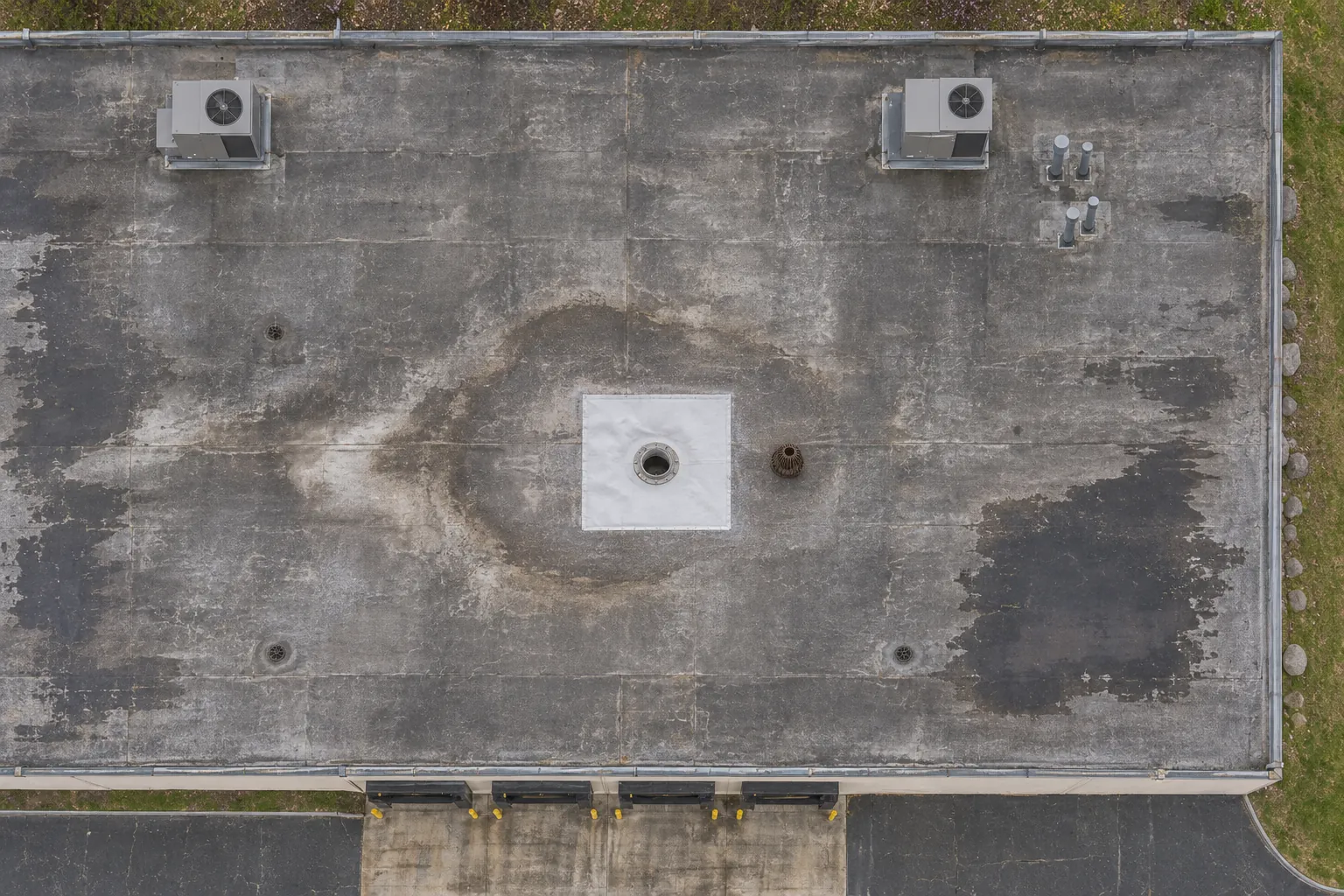
Top-down view of a new white membrane square flashed around a roof drain inside old ponding rings

Flat Roof Repair

Roof
Membrane fields
Leak Point
Drains
Building
Processing areas

Large plant membrane fields between the equipment need drain and lap repairs of their own.

Flat roof repair

Industrial Roof Repair Questions From Hazleton Plant Managers

Equipment

Can a Leak Be Repaired With Machinery Running Below?

Yes, when the work area can be isolated and the equipment protected. Water exposure, debris, and any roof opening are agreed with staff first. If protection cannot be kept in place, a shutdown or another sequence is used.

Why Does Fan Flashing Split Again After Repair?

Vibration, deposits, or equipment movement keep stressing the detail. We inspect the curb connection and the membrane around it, and coordinate with equipment work so the cause is dealt with at the same time.

Upkeep

What Industrial Roof Maintenance Prevents Leaks Between Repairs?

Clear drainage, plus early repair of loose flashing, damaged seams, and traffic wear. Service routes and exhaust areas get extra attention, and each finding is logged by roof location so repeat trouble shows up.

How Often Should Plant Roofs Be Walked?

Many plants schedule a walk after the heaviest season and after equipment changes on the roof. Your own repair history is the best guide to how often.

Inspection

What Does an Industrial Roof Inspection Establish?

The damaged assembly, how far moisture reaches, and the repair boundary, plus access limits, occupied areas, and equipment affecting the details. That separates a surface repair from work into wet insulation or the deck.

Do Abandoned Curbs Need Attention?

They do. Unused curbs keep their flashing but lose regular checks. Many are worth removing and closing over once structural and electrical items are cleared.

Hire a Hazleton Industrial Roof Repair Contractor

Tell us the bay, the equipment, and the leak. We will plan protection with your staff and repair the detail.

Call Us (570) 918-5814