Firm, Compatible Patch
Keep and Overlap
- Adhesion
- Holds tight at every edge.
- Material
- Same family as the roof membrane.
- Layers
- One layer, flat to the roof.
- Underneath
- Dry insulation in the core.
- Result
- New repair laps past it onto membrane.
Catasauqua commercial roof repair often starts with old patches. Years of quick fixes stack up, and the next repair needs a firm surface to bond to.
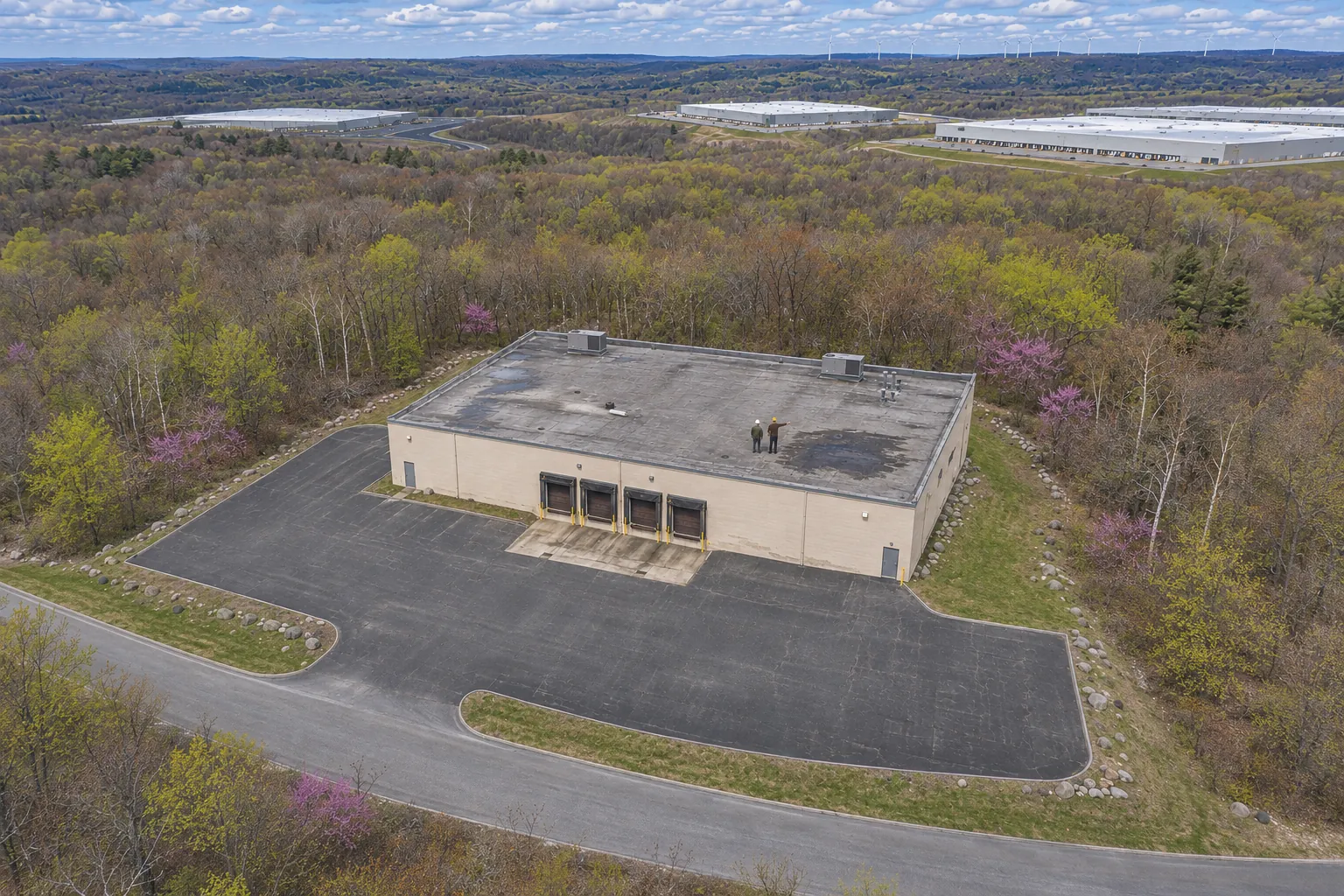
Catasauqua commercial roof repair on patched roofs begins by testing what is already there.
Patches applied over patches hide the membrane and any damage beneath. Each layer adds a bond that nobody has checked, and a loose one lets water spread sideways under the stack.
We examine each patch for adhesion and look at the condition underneath before deciding what stays. Loose layers come off so the new repair finishes on a prepared part of the roof.
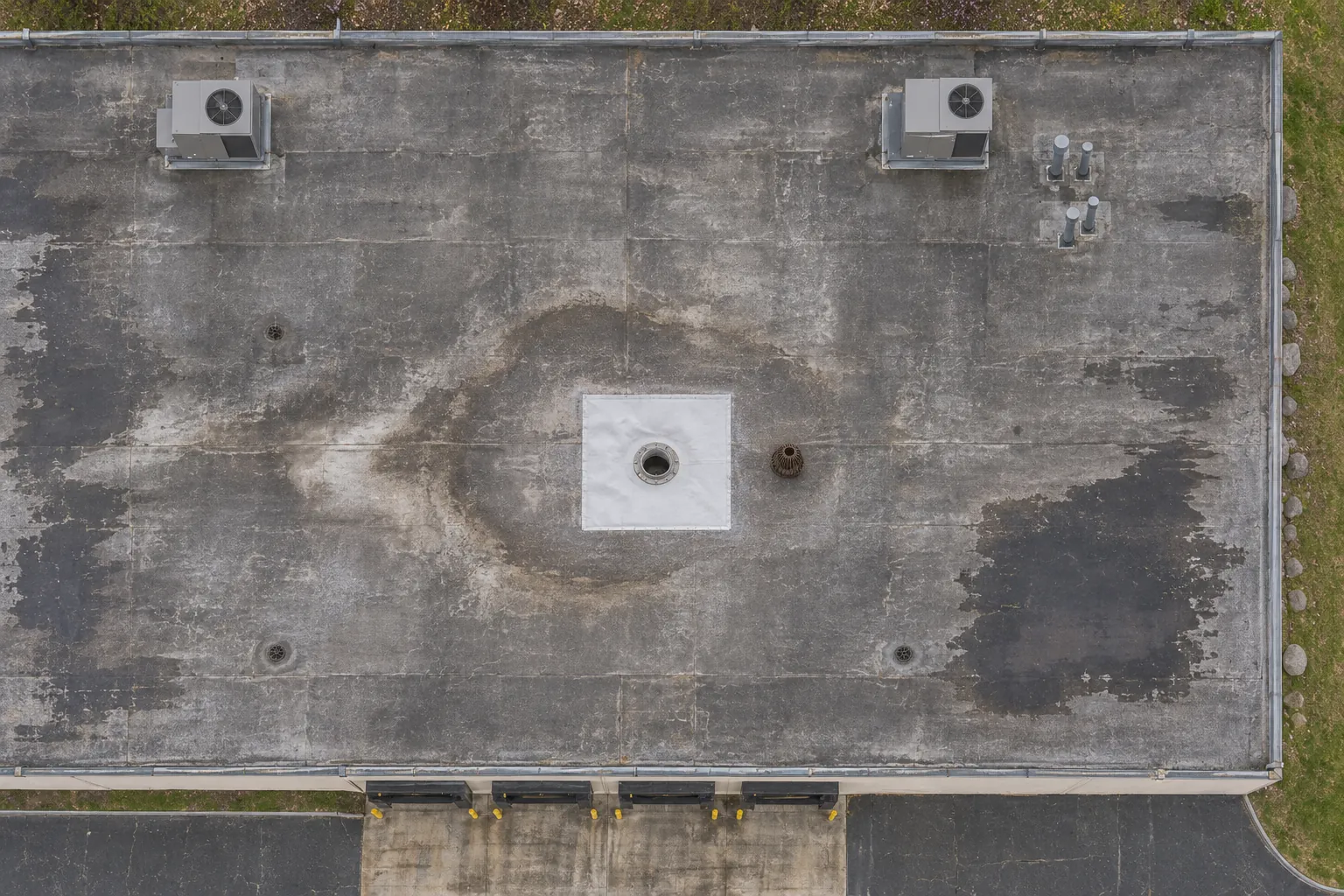
Patch layers hide what is going on underneath.
Three or four layers at one spot each stuck to the last, with the bottom one long since loose from the membrane. The stack is lifted layer by layer until firm membrane shows.
Asphalt mastic over single-ply or sealant over coating creates layers that never stuck to each other. Incompatible layers peel away cleanly once an edge is lifted.
Patch edges lift and curl, catching water and holding it against the roof below. Curled edges collect dirt and debris that hold water on the roof.
Water entering one loose patch travels under the stack and leaks somewhere else. Leaks that move after each patch often trace back to this.
Long-patched spots often sit over insulation that soaked up water for years. Cores under the oldest patch area show how much needs replacing.
Mastic piled around drain flanges narrows the opening and slows water off the roof. The drain opening often shrinks by half under piled mastic.
Some old patches can stay. Most stacked ones come off. The rows show the difference.
The aim is one firm repair in place of a stack.
Each patch is tested for adhesion; loose ones are removed down to the membrane. Firm patches are marked and left in place so the new work can lap past them.
Once layers are off, the membrane, seams, and deck beneath are checked for the original damage. Photos show what was under each removed stack.
The new repair uses material that bonds to the existing membrane, never to an old mastic layer. Primers and adhesives are matched to the membrane type.
Buildup around drain flanges comes off and the drain is reflashed to its full opening. The drain ring is reset on fresh membrane.
One good repair beats a stack of quick ones.
New material adhered to prepared membrane replaces several layers of uncertain adhesion. Owners stop paying to cover the same spot again every season.
Removing old layers shows the original problem, so it gets repaired instead of patched again. The original failure finally gets its own repair.
Taking off piled patches lets water run to the drains instead of pooling behind curled edges. Ponding behind patch edges ends once the stack is gone.
Cores under old patch spots show whether wet insulation needs to come out with the repair. Wet boards come out with this repair instead of years later.
Call and tell us how many times the spot has been patched. Repeated patches usually mean something underneath was never fixed.
Layers come off before anything new goes on.
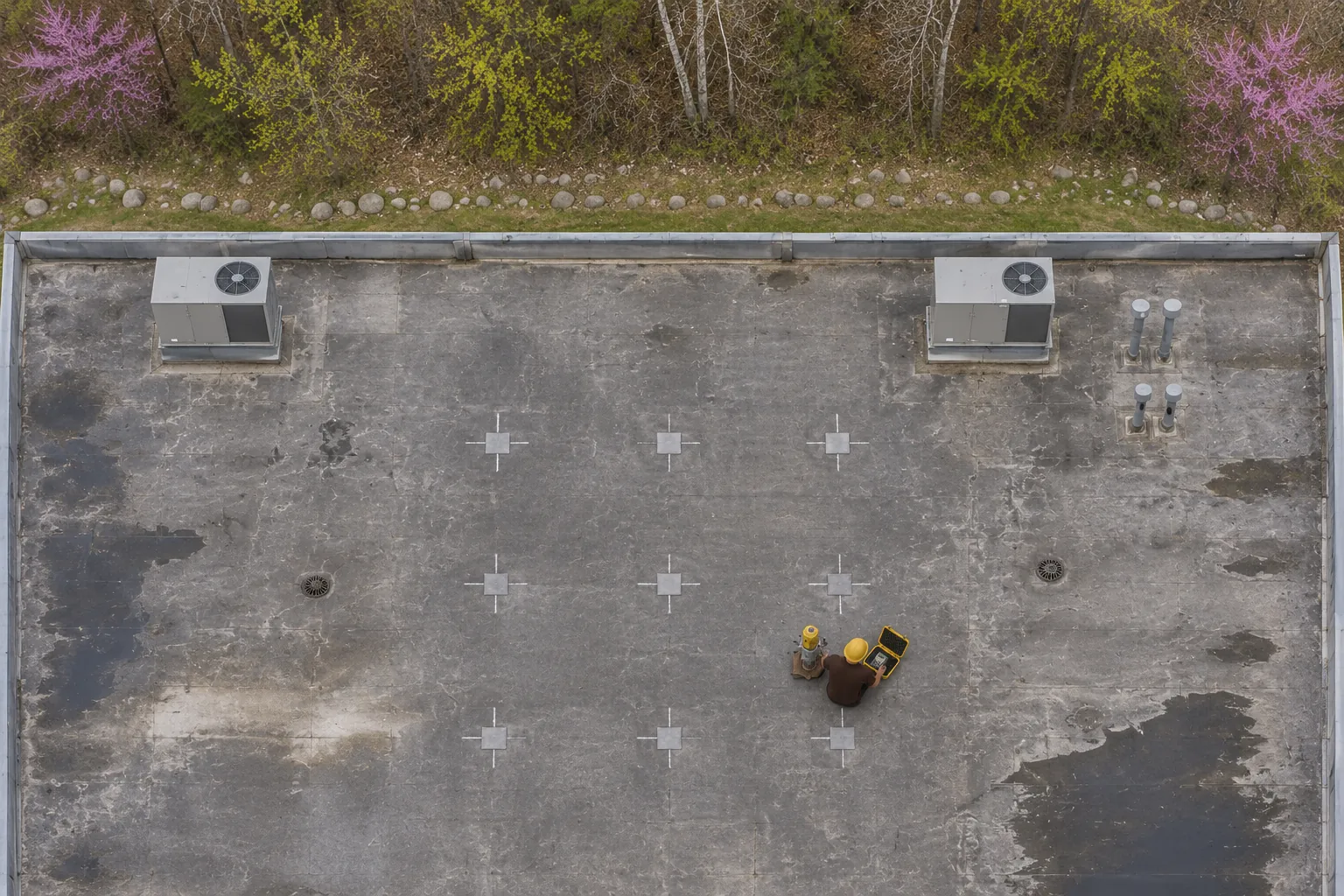
Patches are probed and lifted at the edges to see which ones still bond. Patches that still hold tight at every edge are marked for keeping.
Loose and incompatible layers are removed down to firm membrane. Old material is bagged and taken off the roof.
The exposed membrane and seams are inspected, and cores check the insulation below. Any wet areas found under the patches are added to the written scope.
New compatible material bonds to the cleaned membrane, extending past the old patch area. The repaired area is photographed for your file.
Catasauqua is the farthest of six towns where we repair commercial roofs. The others are listed below.
Home base; industrial park and downtown roofs.
Old sign supports and unused roof penetrations.
Wall junctions where earlier repairs meet.
Plant roofs above stored and packaged goods.
Attached shops with shared walls and transitions.
When they hide damage or block a compatible repair, yes. We check adhesion and the roof underneath before deciding what stays, because new material over a loose patch adds one more uncertain bond.
A firm, compatible patch can stay as part of the roof. The new repair still extends onto prepared membrane around it.
How many patch layers come off, what turns up underneath, wet insulation, drain work, and access. The price is set once the roof has been inspected.
Yes. Catasauqua is part of our regular area, and the first visit follows the same order as in Hazleton: symptoms inside, then the roof.
Commercial and industrial buildings with flat or metal roofs, from small business roofs on main streets to larger warehouses and plants with several roof sections.
Any notes on past patches, who applied them, and when. Even rough dates help us read the layers, and photos of earlier leaks show where the trouble started.
Tell us where the patches are and how often they have failed. We will test each layer, look underneath, and price one firm repair.