Metal Panel Roofs

Hazleton Commercial Metal Roof Repair Contractor

Restore Tight Fasteners, Closed Laps, and Solid Panels

Hazleton commercial metal roof repair starts at the drip and traces the screws, laps, and curbs around it. Repairs follow the water path we find.

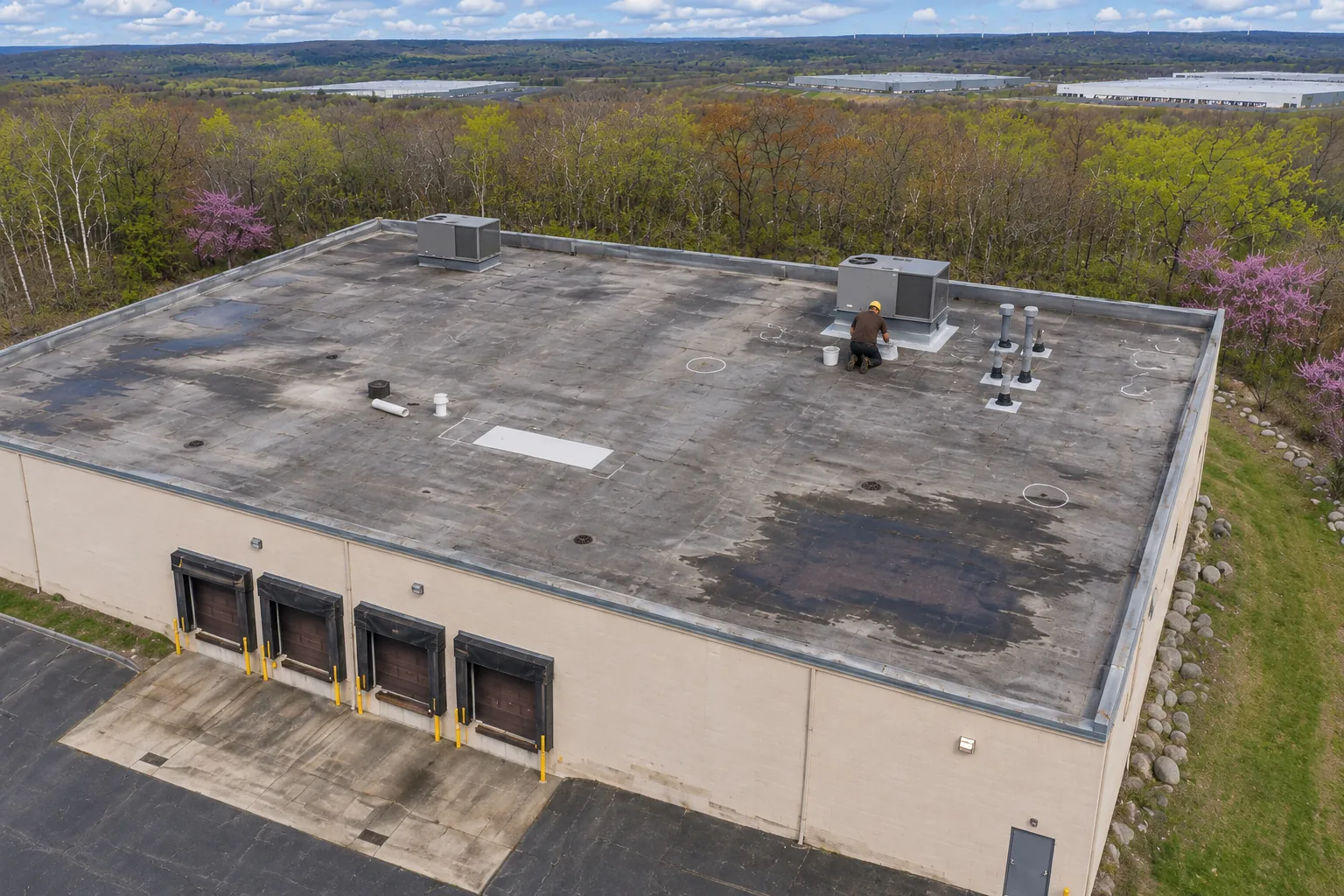
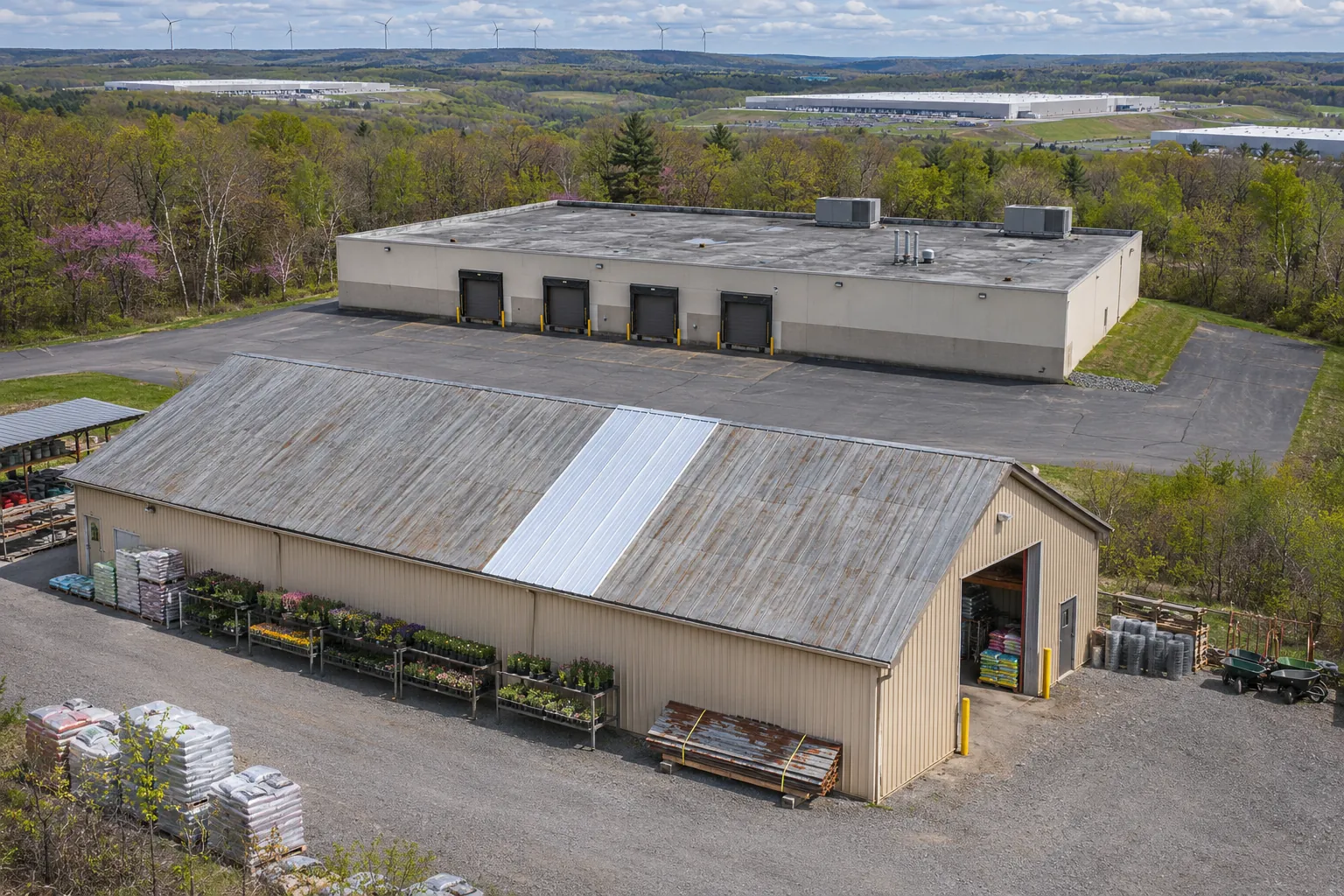
Metal storage building with a strip of new bright panels set into its weathered metal roof
  • FastenersGrip and washers tested
  • RustThickness checked at laps
  • SeamsMovement found first
  • PanelsSwapped when thin

Hazleton Commercial Metal Roof Repair or New Panels

Hazleton commercial metal roof repair keeps most panel roofs in service. When corrosion has thinned the metal, new panels replace the weak run.

Most Metal Leaks

Fastener and Seam Repair

Leak Source
Loose screws, dried washers, or one opening seam.
Metal Condition
Surface rust with full thickness at laps.
Fasteners
Holes still tight enough for a correct screw.
Supports
Purlins firm and holding the panel flat.
Result
Tight fasteners and closed laps on the existing panels.
When Metal Is Thin

Panel Replacement

Leak Source
Holes through the panel or leaks along a whole run.
Metal Condition
Thinning or perforation at laps and screws.
Fasteners
Holes too enlarged to hold any fastener.
Supports
Supports checked so new panels attach to solid steel.
Result
New panels lapped into firm neighbors.

Commercial Metal Roof Repair Problems on Hazleton Buildings

Six conditions cause most drips on metal storage buildings, shops, and plant wings.

  • Loose Exposed Screws

    Daily heating and cooling works screws loose over the years. Each gap at the washer lets water run down the shank into the building. Rows of drips that follow the screw line on the panel usually start here.

  • Enlarged Screw Holes

    Panel movement wallows holes oval. A bigger screw only holds if the metal and purlin around the hole are still firm. Purlins under the hole get checked before a larger fastener goes in.

  • Rust at Laps

    Water held between overlapping panels corrodes the metal from inside the lap. Color alone says little; thickness at the lap tells the story. Laps are opened or probed at the worst spots to measure what metal is left.

  • Opening Seams

    Seams that split again after sealing are moving. Alignment and attachment get corrected before the seam is rebuilt. Fasteners along the seam and the trim over it are inspected together.

  • Curbs and Penetrations

    Flashing at units, vents, and pipe boots cut into metal panels cracks where the panel ribs meet the curb. New flashing is cut to follow the rib shape instead of relying on sealant.

  • Eave and Gutter Edges

    Ice and debris at gutters push water back under panel ends at the eave, where closure strips have dried out. Closures and eave trim get replaced where they no longer seal the panel ends.

Commercial Metal Roof Repair Methods Used in Hazleton

Each method matches one failure; the trace decides which ones a roof needs.

  • Rusted Metal Roof Panel Replacement

    Panels with holes or thinned laps come out. New panels of matching profile lap into firm neighbors and fasten into checked supports.

  • Metal Roof Seam Repair

    Seams are realigned and refastened before sealing, so the joint stops opening. A seam that keeps moving gets rebuilt with new trim.

  • Fastener Replacement

    Loose or stripped screws come out and correct new fasteners with fresh washers go in, sized to the hole and the purlin beneath.

  • Curb and Boot Reflashing

    Flashing at units and pipes is rebuilt to follow the panel ribs, with sealant only where the detail calls for it.

What Metal Roof Repair Fixes for Hazleton Businesses

Repairing what failed keeps the rest of the panels doing their job.

  • Tight Screw Rows

    Replacing loose screws and dried washers closes dozens of small drips along a panel run in one visit.

  • Closed Laps

    Sealing and fastening side laps and end laps stops the water that rides between panels into the building.

  • Firm Attachment

    Checking purlins under weak spots means new fasteners grip solid steel and stay tight through the seasons.

  • Panels Swapped Only Where Needed

    Swapping out just the thinned panels keeps the job smaller than a new roof when the rest of the metal is solid.

Drips Lining Up With Screw Rows?

Call and tell us which panels drip and in what weather. Rows of drips usually lead straight to the fasteners.

Call Us(570) 918-5814

Steps in a Metal Panel Repair

The order keeps fasteners, laps, and supports from being treated as one problem.

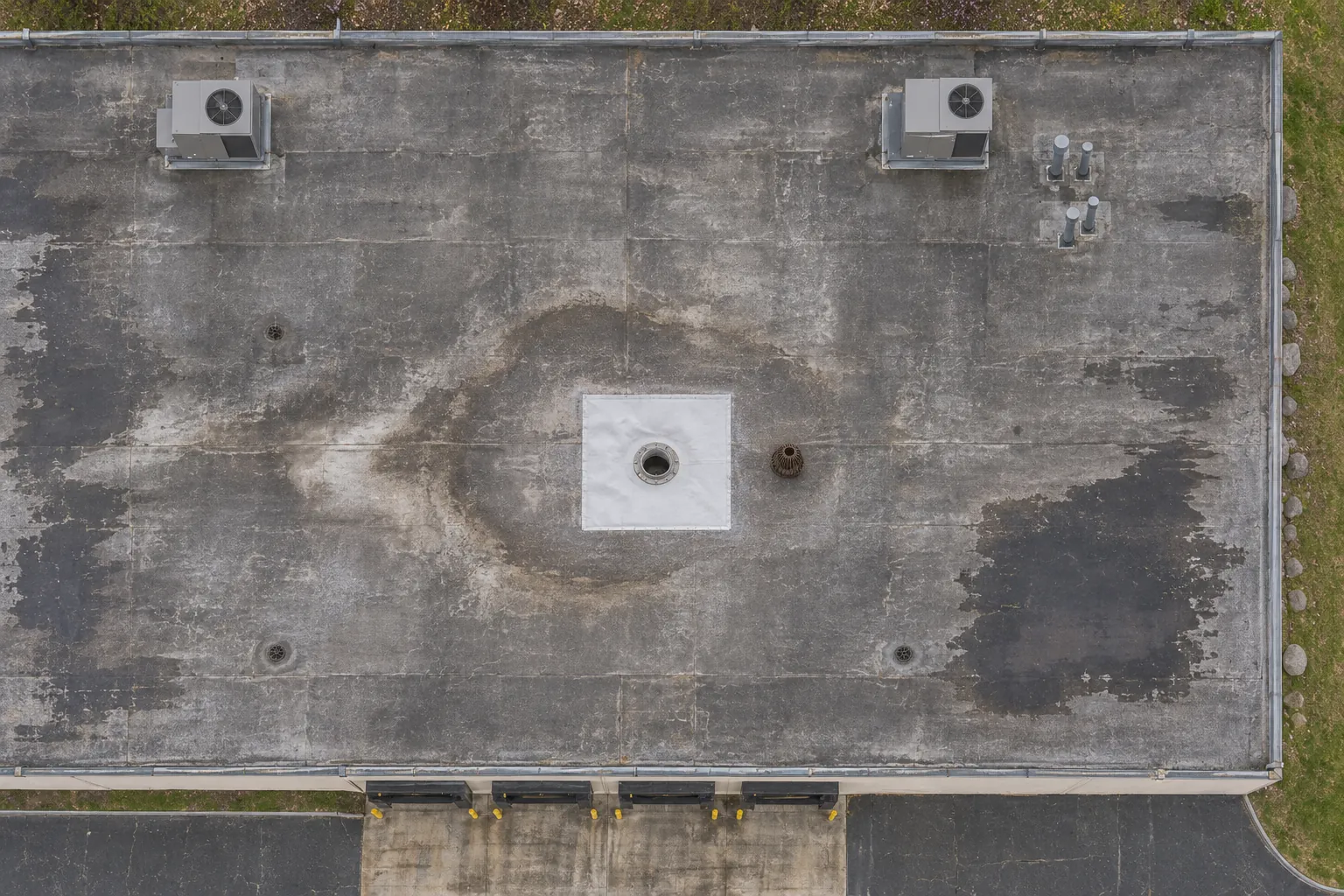
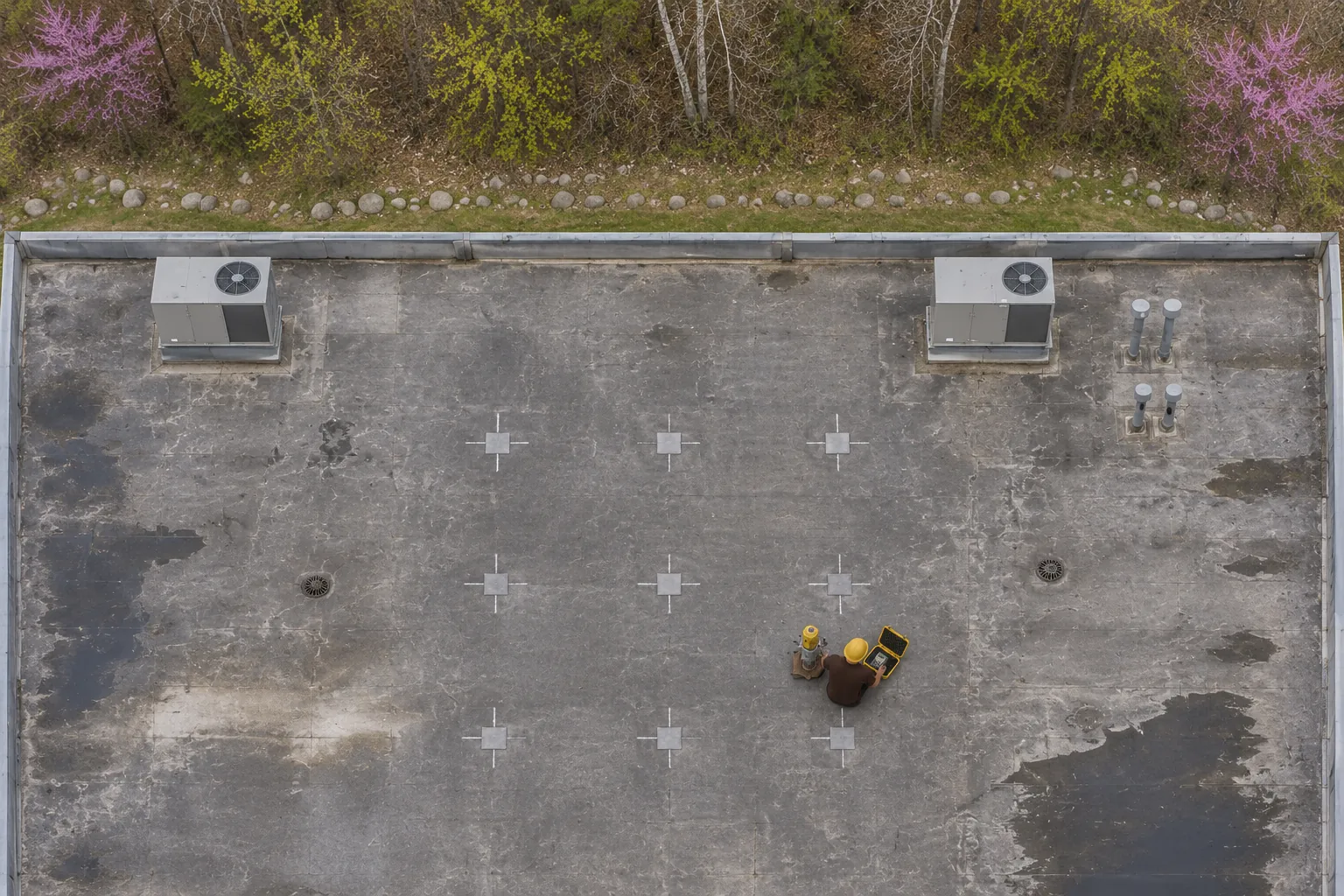
Top-down view of a flat roof marked with a core-cut grid and a roofer taking a core sample
  1. 01

    Start at the Drip

    The reported area gets inspected first, then the screws, laps, and penetrations upslope of it.

  2. 02

    Test Fasteners and Laps

    Screws are checked for grip, washers for cracking, and laps for gaps, rust, and thinning.

  3. 03

    Check Supports Below

    Purlins and clips under weak spots are inspected so new fasteners and panels attach to solid steel.

  4. 04

    Repair the Failed Parts

    Fasteners, seams, flashing, or panels are replaced where the trace showed water entering.

Repairs That Sit Beside Metal Roof Work

Metal buildings often join membrane roofs, plant equipment, or leaks with unclear sources.

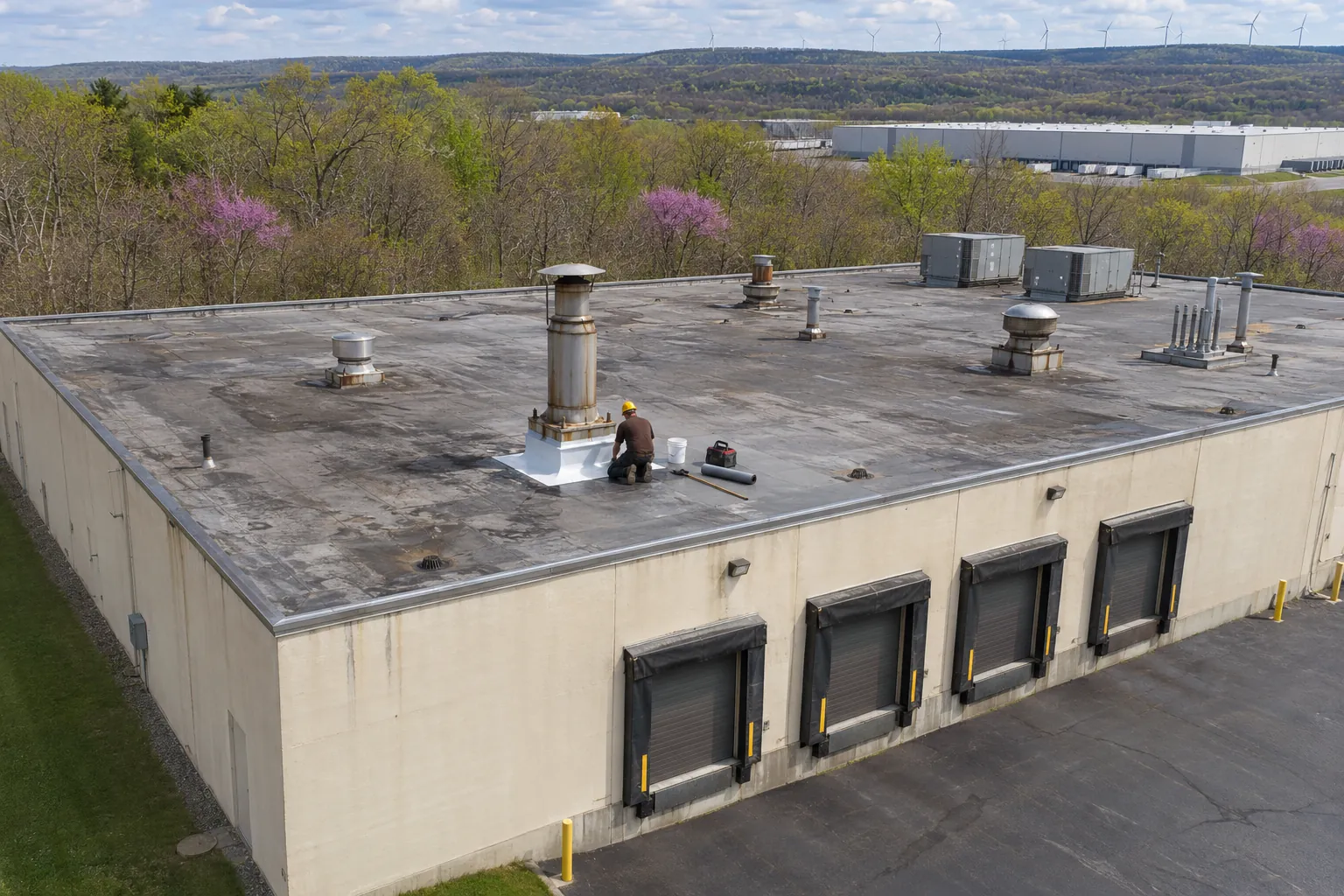
Top-down view of a new white membrane square flashed around a roof drain inside old ponding rings

Flat Roof Repair

Roof
Membrane sections
Leak Point
Drains and laps
Building
Office wings

Offices and loading areas attached to metal buildings often carry low-slope membrane with their own drains and laps to repair.

Flat roof repair

Commercial Metal Roof Repair Questions From Hazleton Owners

Fasteners

What Is the Most Common Cause of Metal Roof Leaks?

Loose screws and worn washers lead the list, with panel laps and equipment flashing close behind. We trace from the drip through the screws, laps, and penetrations near it and repair what the water path shows.

How to Fix Leaking Screw Holes in a Metal Roof?

Check the panel and purlin around the hole first. If the metal holds, a correct oversized fastener with a new washer seals it. If movement or weak support wallowed the hole, those get fixed before any screw goes back in.

Rust

When Does Rust Mean a Panel Needs Replacing?

When the metal has thinned or holed past a local repair. We look at holes, thinning at laps, and the metal around screws, and check the panels and supports beside it so the new panel ties into solid material.

Is Surface Rust a Leak Risk Right Now?

Light surface rust on a full-thickness panel is a watch item for the next roof walk. Rust inside laps and around screws deserves a closer look, because that is where perforation starts.

Seams

Should a Split Seam Be Resealed or Rebuilt?

Rebuilt, when the connection or the metal around it can no longer hold a sealed repair. Alignment, attachment, and movement are checked first; sealant alone in a seam that keeps opening leaves the leak in place.

Why Do Seams Open in Cold Weather?

Metal shrinks in the cold and pulls on fasteners and laps. A seam already loose opens wider on cold nights and lets meltwater in during the day.

Hire a Hazleton Commercial Metal Roof Repair Contractor

Tell us where the panels drip. We will test the screws, laps, and supports and price the repair from what fails.

Call Us (570) 918-5814